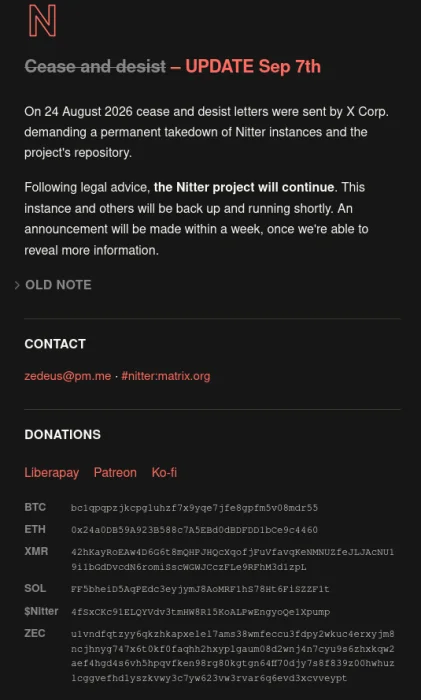
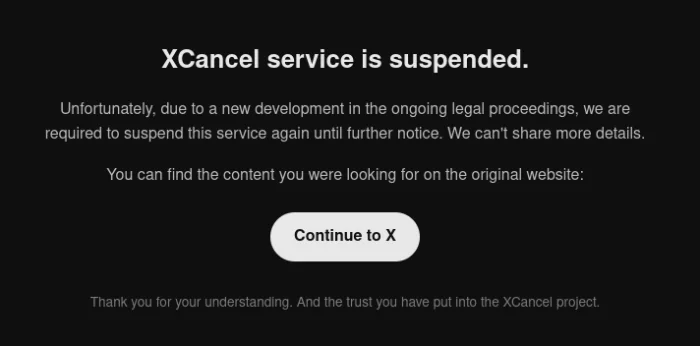
@UsualCat I don't recommend njalla. They are known to boot servers that host content they ideologically oppose. Check out my web hosting provider spreadsheet. It's not the most recent, but I did do a good amount of research: http://kikurizsbpb7ar4ozrzogt6nre3j7s7mccqwxeg3jvppyik2aa475lqd.onion/books/hosting/page/list-of-web-hosting-providers-accepting-crypto
Requires the Tor Browser*
You'll want to go with some offshore host like AlexHost or one that throws any DMCA requests into the bin. Better yet, use one VPS as a reverse proxy with nginx to hide your service's primary IP address. I left a comment on Pitch recently on this very topic that you may want to look at: https://pitchprash4aqilfr7sbmuwve3pnkpylqwxjbj2q5o4szcfeea6d27yd.onion/p/25247bb4#p-1902730e
Here's the quoted version:
My advice is to ensure you have enough IP addresses. That is the primary problem with hosting the third–party front–ends — they get rate limited way too quickly by the platforms. This means you need some way of rotating exit IPs whenever one gets rate limited. The exact same problem exists for Invidious. If you can solve this challenge, then you can do it. Tor exit nodes are likely already blocked and I'm not too confident about VPNs. You may have to give different VPN providers a try. The other issue is figuring out whether certain ASNs are blocked entirely, such as the IP ranges of different hosting providers.
The easiest solution would be using a residential proxy service that rotates the IPs with each connection. However, that is extremely expensive. Resi bandwidth costs a fortune due to the small supply.
If you are hosting an onion site, you will need to ensure the requests to X don't expose your server's real IP address, otherwise they can deanonymize your server and file a DMCA report with your hosting provider. You are going to need to set up some reverse proxies that act as relays for the connections.
All of this is a substantial undertaking and can be very expensive.