

World News & Events Started Apr 21, 2026 1:46 PM

Artificial CoinJoin

2 replies - 120 views - 1 thanks - 0 tippers - 3 watchers

Apr 21, 2026 1:46 PM
#1
coinjoin btc cj private


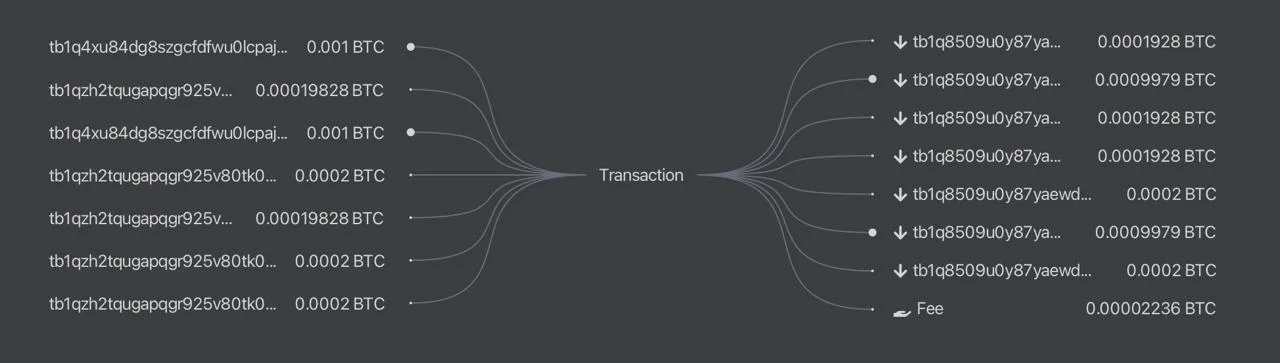
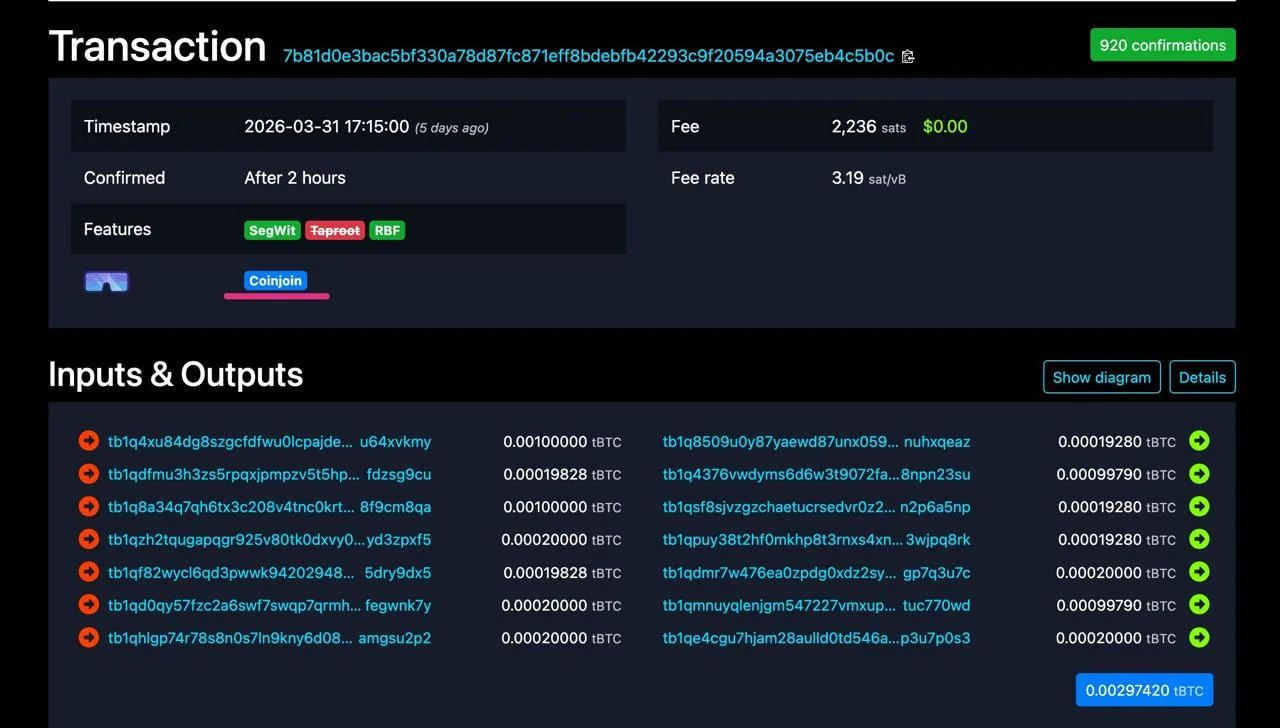
I managed to create an artificial CoinJoin. In one BIP-44 Wallet I have a huge number of addresses, and each time funds come in, a new UTXO is created. Then I made a single transaction using inputs from multiple addresses and equalized the outputs.

Of course, an analyst could argue that all the inputs were signed by the same owner. But in a public block explorer, that information isn’t visible same as with both real CoinJoins and this artificial one. Even the mempool tags it as a CoinJoin.

What do you think is this a viable substitute for a real CJ with multiple participants? And how much does it actually hurt anonymity? :0
1 thanks - 0 tippers - 3 watchers

Replies

Page 1 of 1 - 2 total
Apr 21, 2026 2:46 PM
#2

i mean that looks super cool, idk nothing about how any of that is working tho
and monero is just simple u know, plug and play type thing lol

1 thanks - ksenia11 - 0 tippers
Apr 30, 2026 10:06 PM
#3

What do you think is this a viable substitute for a real CJ with multiple participants?

Absolutely, positively, indubitably not. Any clustering technique worth anything whatsoever will sniff these out immediately. Sure, that single transactions looks like coinjoin transaction in isolation. But each of those inputs have an on-chain history, and each of the outputs will have their own on-chain history. Due to this fact, a clustering algorithm will look at the correlation between the activity of the inputs and outputs. To use a dumb example, let's say that you get paid 0.01 BTC by some employer regularly. Let's then say you send 0.05 BTC to a landlord regularly. If all your inputs to your fake coinjoin come from the same place (your employer), and go to the same place (your landlord), you fake coinjoin will get flagged as being likely a single-signer consolidation transaction. This is opposed to a real coinjoin where two previously independent clusters "collide" at this transaction, and mix the coins' respective histories. Most use cases are most complicated than my dumb example, but hopefully this gets the point across.

2 thanks - cipherchan, tuw8 - 1 tippers

Post A Reply

You must be logged in to reply. Login or register.